
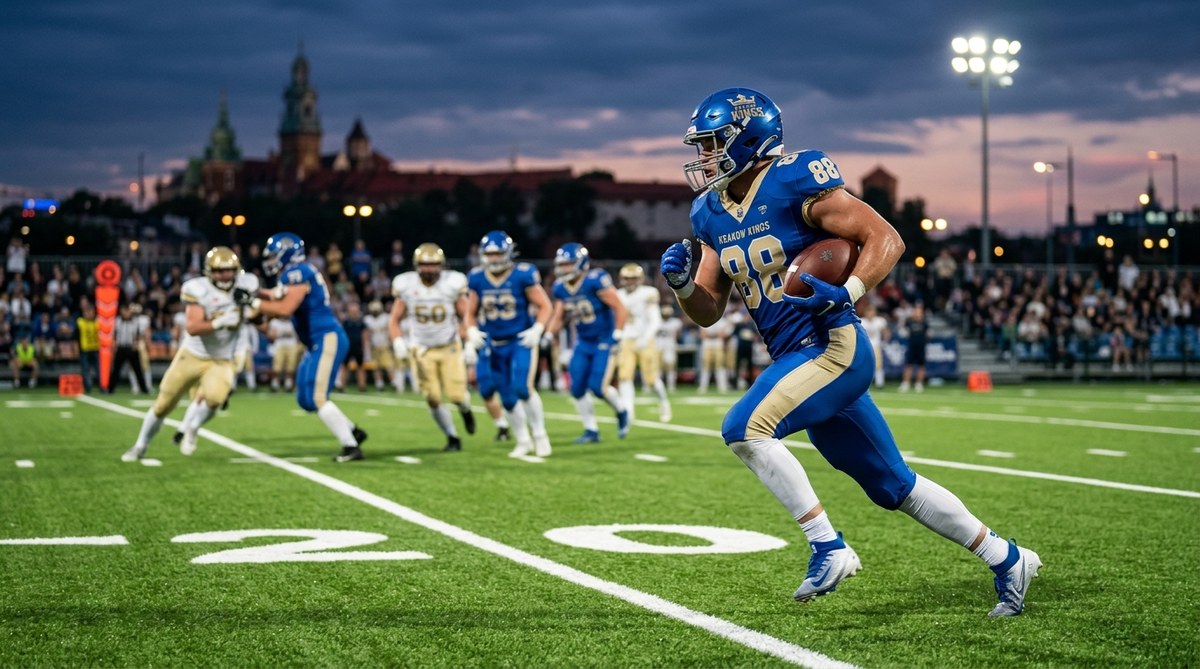
American football welcomes newcomers with open arms and fast paced action. If you are curious about the game, this guide is your friendly starting point. We will cover the essentials you need to know to enjoy watching games, practice with a local team, or even join a community league in Krakow. Our aim is to explain the sport clearly, share practical drills, and connect you with the thriving Polish football scene including fans and players around Krakow.
What is American Football
American football is a team sport played on a rectangular field with end zones at each end. Each team has 11 players on the field at a time. The main objective is to advance the football into the opponent’s end zone to score points. The team with the ball (the offense) typically moves the ball in a series of plays called downs.
How the game flows
- A game starts with a snap from the center to the quarterback.
- The offense has four attempts, called downs, to gain ten yards or more.
- If they achieve the ten yards, they earn a new set of four downs. If not, the ball goes to the other team.
- Plays include running the ball, passing the ball, or a combination of both.
- After a scoring play or a change of possession, the other team takes the field.
Scoring at a glance
- Touchdown (TD) = 6 points
- Extra point kick = 1 point
- Two point conversion = 2 points
- Field goal = 3 points
- Safety = 2 points
A few quick terms you will hear
- Line of scrimmage: the imaginary line where the ball is placed at the start of a play.
- Down and distance: the current number of attempts and how many yards are needed.
- Turnover: when the ball changes hands due to interception or fumble.
Understanding these basics helps you enjoy games more and prepare for practicing with others in Krakow or nearby clubs.
Equipment and Safety Essentials
What you need to start
- Helmet with a face mask: protects the head and face.
- Shoulder pads: protect the shoulders and chest.
- Mouthguard: protects teeth and reduces the risk of concussions.
- Football cleats: provide grip on grass or turf.
- Practice jersey or t shirt and athletic shorts.
- Optional but useful: thigh and knee pads, gloves for grip, and a water bottle for hydration.
Budget friendly gear for beginners
- Start with a quality mouthguard and well fitting helmet.
- If your budget is tight, join a program or club that provides gear for beginners.
- Always check equipment fit before any practice or game. A loose helmet or ill fitting pads can be dangerous.
Safety first during practice
- Warm up properly before drills to reduce injury risk.
- Use soft contact progressions when learning tackling and blocking.
- Communicate with coaches and teammates about any pain or discomfort.
- Never practice dangerous drills without supervision.
Player Positions 101
Offense
- Quarterback (QB): the leader who throws or hands off the ball.
- Running Back (RB): carries the ball on rushing plays and helps with blocking.
- Wide Receiver (WR): catches passes and helps stretch the defense.
- Tight End (TE): blocks on running plays and can catch passes.
- Offensive Linemen (OL): block to protect the quarterback and create openings for runners.
Defense
- Defensive Linemen (DL): rush the quarterback and stop the run at the line of scrimmage.
- Linebackers (LB): versatile players who defend the run and pass and may rush the quarterback.
- Defensive Backs (DB): cover receivers and defend against passes.
- Safeties (S): last line of defense who read plays and help in both run and pass defense.
Special Teams
- Kicker (K) and Punter (P): specialists for kickoffs, field goals, and punts.
- Returner: player who receives kicks and tries to gain yards.
Quick notes on positions for beginners
- You do not need to know every position perfectly to start. Focus on the roles that catch your interest and gradually learn more as you train.
- Many clubs rotate players in different roles to find the best fit.
Getting Started: Training and Drills
Beginner friendly drills
1) Ball handling and grip
– Practice gripping and carrying the ball securely with both hands.
– Use a partner to practice short exchanges to build comfort with the football.
2) Footwork and agility
– Ladder drills or cone drills improve quick feet and balance.
– Work on two to three foot contacts per step to build precision.
3) Throwing mechanics for quarterbacks
– Start with a short straight line throw to a partner.
– Focus on grip, elbow height, shoulder rotation, and follow through.
4) Catching and hand positioning
– Catch with hands not palms and practice high and low catches.
– Use soft hands and keep eyes on the ball.
5) Route running basics
– Learn simple routes like a straight go, arrow route, and curl.
– Practice precise cuts and timing with a partner.
6) Basic blocking drills
– Learn safe blocking stance and body positioning.
– Use pads or a shield to practice controlled contact.
7) Safety and conditioning
– Light conditioning with mobility work like hip circles and shoulder rolls.
– Build up endurance with short runs and walking breaks.
Weekly practice structure
- Warm up and mobility work (10-15 minutes)
- Skill stations (20-30 minutes)
- Team drills and plays (20-40 minutes)
- Conditioning and cool down (10-15 minutes)
Getting the most from drills
- Focus on technique before speed or power.
- Ask for feedback from coaches and veterans.
- Record and review to see what to improve.
Fundamentals of Plays and Formations
Basic terms you should know
- Formation: the arrangement of players before the snap.
- Snap: the moment the ball moves from the center to the quarterback.
- Play call: the instruction for the next action on offense.
- Audibles: changes to the play at the line of scrimmage based on the defense.
Simple formations to study
- I formation: a traditional set with a running back lined up behind the quarterback.
- Shotgun: quarterback stands a few yards behind the center for longer passing plays.
- Trips: three receivers on one side of the formation.
- Single back: a single running back behind the quarterback with a balanced line.
Reading the defense
- Watch for defensive alignments before the snap.
- Learn a few common tells to anticipate pressure or coverages.
- Start with simple checks and audibles once you are comfortable with the plays.
Fitness and Conditioning for American Football
Strength training basics
- Focus on compound lifts: squats, deadlifts, bench press, and rows.
- Core work matters for balance and stability during tackles and blocks.
- Progressive overload gradually increases weight and volume.
Cardio and mobility
- Incorporate interval training for bursts of speed and recovery.
- Include mobility work for hips, shoulders, and ankles to prevent injuries.
Recovery and nutrition
- Hydrate well before, during, and after practice.
- Eat a balanced diet with protein for muscle repair and carbohydrates for energy.
- Sleep enough to support recovery and performance.
How to Watch and Learn
Where to watch games
- College football and NFL broadcasts are widely available through local broadcasters and streaming services.
- Watching Polish or European leagues can also provide useful insights into sport culture and technique.
Learning resources
- Short highlight reels to study specific plays.
- Coaching videos and drills for beginners.
- Local Krakow Kings events and meetups where you can observe and practice.
Polish angle and local pride
- Poland has a growing community of American football players and fans.
- Watch Polish players who have joined the NFL or European leagues and follow Krakow Kings for events, practices, and social meetups.
Getting Involved Locally in Krakow
How to join or start playing
- Look for a local club or flag football league nearby.
- Reach out to Krakow Kings for training sessions, tryouts, or youth clinics.
- Attend meetups or open practice days to meet players and coaches.
What to bring to your first session
- Comfortable athletic wear and proper footwear for the field surface.
- A water bottle and a small towel.
- A mouthguard if you have one, and any required consent forms or waivers.
Building a game plan for beginners
- Start with fundamental drills and learn the terminology.
- Observe teammates to understand the flow of practices.
- Set small goals like improving grip, footwork, and catching consistency.
Playbook Basics for Newcomers
Simple play calls you can remember
- Run plays: a basic handoff and run behind the line.
- Quick passes: short throws to a receiver or tight end.
- Play action: a fake run to open space for a pass.
Formations to practice
- I formations and shotgun sets good for learning concepts.
- Practice routes with a partner to understand timing.
How to progress safely
- Increase intensity gradually as you build confidence.
- Stop if you experience pain or dizziness and consult a coach or clinician.
Poles in the NFL and Community Spotlight
Polish players making waves
- Several Polish athletes have taken part in the NFL and college football.
- The Krakow Kings and other clubs celebrate their stories to inspire local players.
Local impact and growth
- Polish fans enjoy the tactical depth of the sport and the teamwork it requires.
- The community focuses on education, safety, and inclusive participation.
FAQ
1) Is American football suitable for beginners with no football background?
– Yes, many clubs offer beginner programs and gradual drill progressions.
2) What equipment should I buy first?
– Start with a mouthguard and a properly fitting helmet. A coach can guide you on pads and cleats.
3) How often should a beginner practice?
– Two to three sessions per week is a solid start, with rest days in between.
4) Can I watch games to learn the sport?
– Absolutely. Watching games helps you learn timing, positioning, and decision making.
5) How do I connect with Krakow Kings or local leagues?
– Check the Krakow Kings website, social media pages, and community boards for schedules and contact information.
Final Thoughts
American football is a sport built on teamwork, strategy, and continuous learning. As a beginner, take your time to learn the fundamentals, stay safe, and enjoy every practice you attend. The Krakow Kings community is here to help you on this journey, whether you want to understand the rules, master the drills, or simply cheer from the stands. By starting with the basics and gradually expanding your knowledge of positions, formations, and plays, you will grow into a confident player or supporter who contributes to the vibrant Polish football scene. Welcome to the road of learning, growth, and team spirit.
 Mateusz Kaminski