
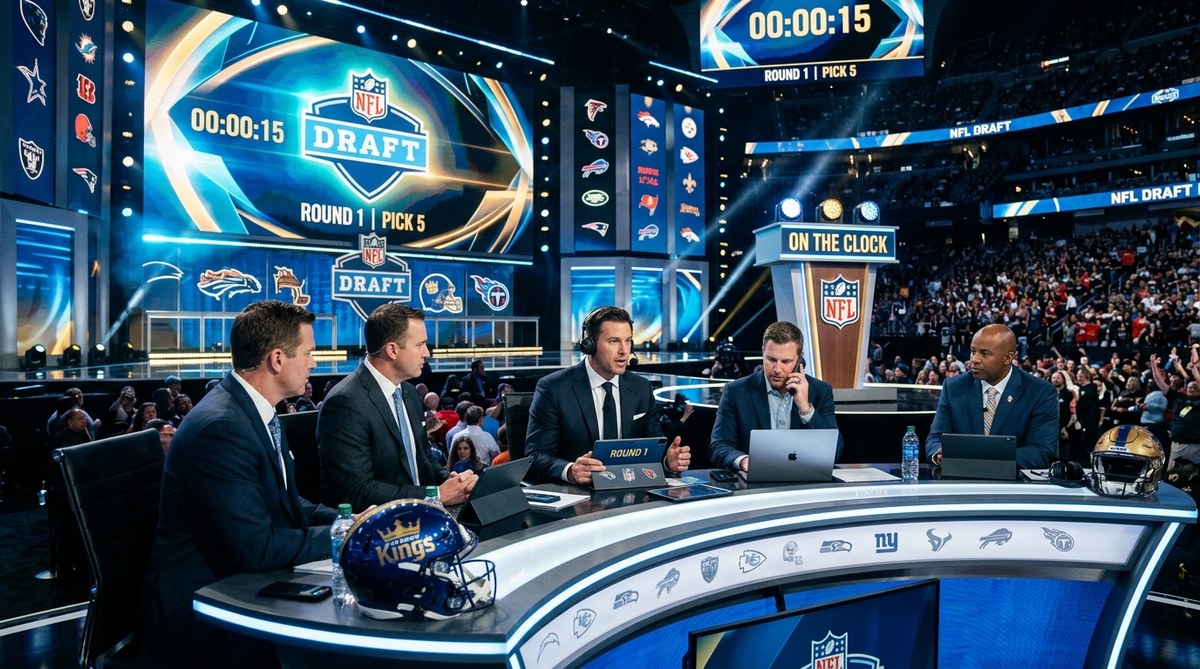
American football fans in Krakow and across Poland follow the NFL with big questions every spring. The draft is the moment when the league’s future stars cross paths with the teams that will attempt to turn potential into on field success. If you want to understand why a team trades down or why a young quarterback is suddenly the talk of the off season, this step by step guide is for you. Here we break down the draft mechanism in plain language, tie it back to what Polish fans care about, and give you practical takeaways you can use when you read team reports, watch the broadcasts, or discuss strategy with fellow Krakow Kings supporters.
Understanding the NFL Draft Basics
- The NFL Draft is the league wide talent acquisition event. It is the mechanism teams use to add young players who have completed college ball or have declared for the draft.
- The purpose of the draft is two fold: to distribute new talent across all teams and to reward teams that performed at a higher level the previous season with more favorable picks later in the round.
- The draft currently runs over three days and consists of seven rounds. Each pick represents a contract opportunity for a rookie and a chance for a franchise to build depth and future starters.
- The draft is not the only path to the NFL, but for many players it is the moment they transition from college football to the pros. For fans, it explains why a team takes a flier on a so called up and coming prospect or reaches for a well known college star.
What is involved on draft weekend
- Teams prepare comprehensive draft boards based on film study, athletic testing, and interviews.
- The event is televised with analysts explaining the implications of each pick and trade.
- Trades can reshape the order, sometimes dramatically, as teams move up or down to grab a specific player or to acquire future assets.
Why it matters for teams
- A single pick can change a franchise’s trajectory for years.
- The rookie class sets the tone for cap management, positional depth, and internal competition.
- Even later picks can become cornerstone players if development goes well.
How Draft Order Is Determined
- The baseline order is determined by the previous season’s results. Teams with worse records typically pick earlier in each round.
- Tiebreakers are used when two teams finished with the same record. These can include strength of schedule, division standing, or other official tiebreak rules.
- Trades between teams can alter the draft order. A team may swap a current pick for a higher or lower pick, or for players and other assets.
- Compensatory picks are awarded to teams that lose more or better free agents in the previous season. These extra picks usually appear in rounds three through seven and can slightly shuffle the later portions of the board.
- The combination of trades and compensatory picks means the actual draft order you see on draft night often differs a lot from the final “inverse standings” baseline.
The Draft Week Timeline
- The draft is structured across three days. A typical modern framework is:
- Day 1: Rounds 1 and 2 plus sometimes Round 3
- Day 2: Rounds 4 and 5
- Day 3: Rounds 6 and 7
- Each pick is subject to a time clock, with the clock length varying by round. Early rounds allow more time for teams to discuss complex evaluations; later rounds move faster as fewer top prospects remain.
- Even though the schedule is predictable, surprise trades and last minute decisions are a hallmark of the event. Expect drama as teams pivot based on available players and in house needs.
The Eligibility Rules and Player Declaration
- Most players are entering from college football, where players complete their eligibility or declare early if they feel ready to turn pro.
- Eligibility hinges on factors like college status, age, and declared intent to enter the draft. Some players are underclassmen who must weigh the risk of not hearing their name called.
- Not every player who declares will be drafted. The pool is large and scouts, coaches, and front offices must distinguish potential from polished production.
- In some cases, players with non traditional routes (international programs, junior colleges) can still be selected if teams evaluate them as prospects.
The Draft Process On Draft Day
- Before the televised portion begins, teams compile their final boards, refine their targets, and confirm trades they want to pursue.
- On draft night, the announcers explain the pick and provide context such as player strengths, college performance, and fit with the drafting team.
- When a team makes a selection, the player may be announced at a draft party, and the team moves on to its next pick. If a trade is executed, the new owner of the pick is revealed and the clock continues.
- Scouting and analytics departments are heavily involved behind the scenes; coaches and general managers use a mix of film study, combine results, pro day numbers, medical reports, and character interviews to inform decisions.
- Some picks come with immediate expectations for playing time; others are intended to develop in the long term. The variation is part of what makes the draft both exciting and nerve wracking for fans.
The role of trades on draft day
- Trades can move a team up to select a specific player they covet, or they can move down to accumulate more picks or assets.
- Teams sometimes trade future picks as part of a current deal, betting on their future performance to stay competitive.
- Compensatory picks can be added or adjusted after the draft, reflecting the free agency activity of the previous offseason.
The value of day to day scouting during the draft
- Prospects are evaluated from multiple angles: performance on the field, athletic testing, and personal interviews.
- Teams look for traits such as leadership, work ethic, adaptability, and coachability in addition to raw athletic skill.
- Analytics and advanced metrics help quantify a player’s potential and risk, especially when comparing players across positions.
How Teams Scout and Value Prospects
- The NFL Draft is not about selecting the best college player alone; it is about selecting the best fit for a team’s system, culture, and cap situation.
- Common evaluation inputs include:
- Film plus game tape from college seasons
- The NFL Combine results and pro day numbers
- Size, speed, agility, and explosiveness
- Technical skills such as footwork for linemen or route running for receivers
- Mental makeup, leadership, and ability to learn a playbook quickly
- The scouting process culminates in a draft plan that prioritizes certain positions or traits aligned with a team’s strategic goals.
How Draft Pins Translate to the Roster
- A draft pick is the beginning of a player’s contract and a test of their ability to contribute at the highest level.
- Early picks (rounds 1 and 2) are often expected to contribute within their rookie season, sometimes starting or playing significant snaps.
- Middle to late round picks are frequently developmental players who earn a role after learning the system, improving technique, and adding weight or speed.
- The cap implications of drafted players vary by round and contract structure, which heavily influences team decisions on whether to extend a rookie or pivot to another option.
- Injuries, development curves, and scheme fit all impact how a rookie pans out in year one and beyond.
Common Draft Day Scenarios and Pitfalls
- Reaching for a player because of name recognition while ignoring scheme fit or character concerns is a common pitfall.
- Overvaluing a single position change can misalign the rest of the draft board, leaving a team thin at other critical spots.
- Trading up too aggressively can deplete future assets and limit the team’s flexibility in later rounds.
- Conversely, moving down too often can cause teams to miss out on top prospects who could be immediate contributors.
- The best teams balance upside with practicality: they identify a few elite targets and fill in with solid, reliable players later in the draft.
- For fans, it is important to separate hype from production indicators. Looking at college competition level, quarterback development, and the pro readiness of a player can help you understand why a pick was made.
Draft Preparation for Fans
- Follow official team pages, league communications, and trusted analysts to learn about the board and the rationale behind picks.
- Build a short list of players you would be excited about for your team and track which ones are taken or remain available as the draft unfolds.
- Use mock drafts and scenario planning to understand how trades could affect the board and your team’s decisions.
- Watch for breakouts in analysis around the scouting combine and pro days; these events often reshape the perception of prospects.
- For Krakow Kings fans, use local channels to compare your team’s picks with national trends and analyze how new players fit the tactical approach you love.
Poles in the NFL and Draft Analyses for Polish Fans
- Polish football fans have a strong interest in how the NFL Draft shapes the league and how Polish players in the pipeline can reach the pros.
- The Krakow Kings community can benefit from tracking Polish athletes who pursue football at a high level and watching how their paths align with NFL Draft trends.
- Our portal offers articles that connect college football stories, draft analysis, and the realities of professional development. For a deeper dive into Polish players and trends, check the Poles in the NFL collection and related guides.
Practical Takeaways for Krakow Kings and Polish Fans
- The draft is not just about who gets picked first; it is about how a team builds a roster around those picks, the contracts involved, and the long term strategy.
- Understanding draft trades helps you anticipate how your team might improve or shift priorities in the offseason.
- Pay attention to the scouting narrative: a player may rise after the Combine or drop due to character concerns or injuries. Your opinion as a fan can evolve with new information.
- Use the draft as a lens to study how the game of football evolves: new athletic profiles, different positional value, and evolving defensive and offensive schemes.
- Engage with the Krakow Kings community to compare draft strategies with both European and American perspectives. Shared insights strengthen your understanding and enjoyment of the sport.
A Step by Step Recap of How the NFL Draft Works
- Teams evaluate hundreds of prospects using film, testing, and interviews.
- The NFL assigns an order based on the previous season and then handles trades and compensatory picks.
- The draft unfolds over three days with seven rounds, each pick representing a rookie contract and a chance to shape a franchise.
- Trades can alter the board and bring in future assets or different players rather than just picks.
- Players who declare for the draft must meet eligibility rules and are evaluated for readiness to compete at the NFL level.
- The result is a rookie class that can impact teams immediately or over time, depending on the fit and development.
Final Thoughts
The NFL Draft is a complex, dynamic process that blends strategy, talent evaluation, and a little bit of luck. For Krakow Kings fans and Polish followers, understanding the flow behind each pick helps you appreciate the drama, the decision making, and the long term implications for your favorite teams. Whether you are new to American football or a seasoned follower of college and pro ball, the draft offers a compelling narrative about how a league builds its future one pick at a time.
If you want more guided explanations, plan to follow our site for draft focused analyses, spotlight features on promising players, and tactical breakdowns that tie draft choices to on field performance. The Krakow Kings community is here to share insights, track Polish connections to the NFL, and bring you closer to the action in a way that honors our Polish football culture while staying current with the global game.
 Mateusz Kaminski